Top Poker Sites
  Best Online Sports Betting Sites
  Claim the Best Online Gambling Bonuses
  The Best Slots Games to Play Online
  Reviews of Online Gambling Sites





Affiliate Disclosure: Some links on Gambling Nerd are affiliate links. If you use them to sign up or deposit, we may earn a commission at no extra cost to you. These rewards help fund new guides, but they never influence our verdicts. Our recommendations are based on independent research and our own ranking system.
It’s important to learn how the different types of sports bets work before signing up with an online sportsbook.
This guide breaks down the most popular betting options, including moneylines, point spreads, totals, props, and parlays.
We’ll explain how the odds work and provide clear examples to help you understand the most common types of sports wagers. Let’s get into it.
Nerd Picks of the Month



-

-

-

-
+4 more



-
-
-

-
+12 more



-
-
-
-
+8 more



-
-
-
-
+12 more






-
-
-
-
+13 more



The Three Main Types of Sports Betting Wagers
Most sports bettors stick to three classic wagers: moneylines, spreads, and totals. We’ve explained how each bet works.
Moneylines or Straight Wagers
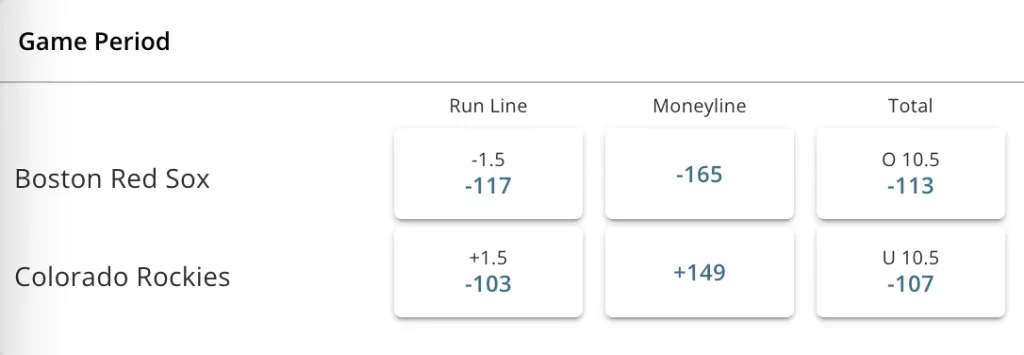
This is a simple bet on the result of a game. The sportsbooks will publish odds on every potential outcome. Moneyline odds tell you two things:
- The profit you’d earn from a winning bet.
- The likelihood of a bet winning.
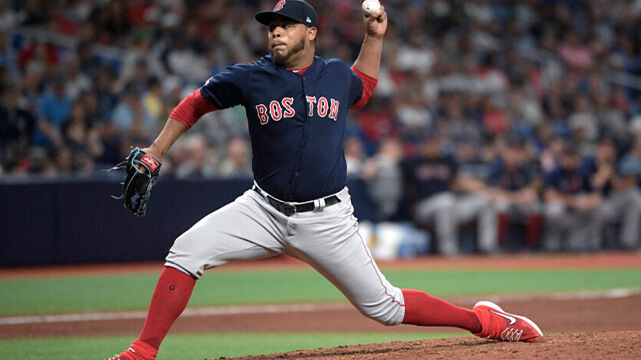
Here’s an example of a moneyline from an MLB game:
- Boston Red Sox to beat Colorado Rockies (-165)
- Colorado Rockies to beat Boston Red Sox (+149)
If the odds are negative, they tell you how much you’d need to wager to earn a $100 profit. In this example, a $165 bet on the Red Sox would net you a $100 profit if Boston wins. Odds of -165 imply about a 62.3% chance of winning.
When moneyline odds are positive, they show the profit you’d earn from a winning $100 wager. In this case, a $100 bet on the Rockies would net you $149 if Colorado wins. Odds of +149 suggest about a 40.2% chance of winning, so Colorado is the underdog.
Point Spreads
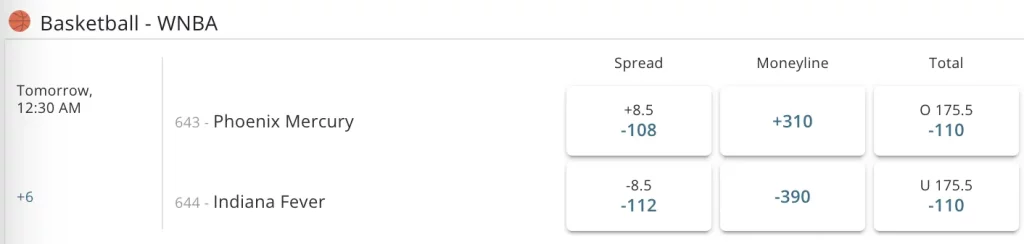
This is one of the most popular betting options for basketball and football games. One team is given a handicap, which creates a point spread. You can then predict which team will cover it.

Here’s an example of a point spread on an WNBA game:
- Phoenix Mercury +8.5 vs. Indiana Fever (-108)
- Indiana Fever -8.5 vs. Phoenix Mercury (-112)
If you think the Fever will win by at least 9 points, you can bet on Indiana to cover the spread. If you think the Mercury will either win outright or lose by 8 points or fewer, you can bet on Phoenix +8.5.
You’ll find similar betting options in other sports, including run lines in baseball, puck lines in hockey, and handicaps in soccer.
Totals or Over/Under
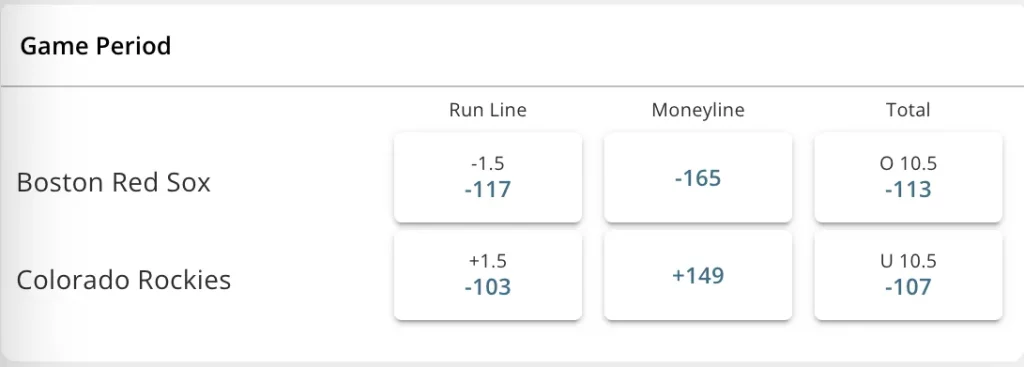
A simple over/under bet is a wager on the combined number of points, runs, or goals scored in a game.
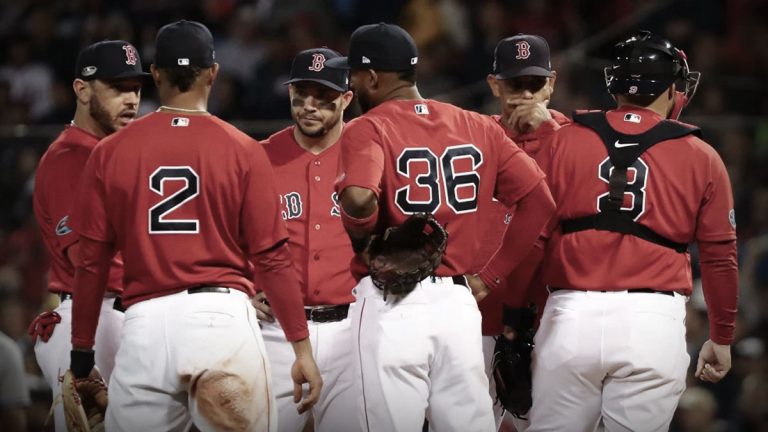
Here’s an example from an MLB game:
- Boston Red Sox vs. Colorado Rockies over 10.5 runs (-113)
- Boston Red Sox vs. Colorado Rockies under 10.5 runs (-107)
If you expect the teams to combine for at least 11 runs, bet on the over. If you think they’ll combine for 10 runs or fewer, bet on the under.
You’ll also find alternative totals, team totals, and over/under bets on specific halves, quarters, periods, or innings at the best sportsbooks.
Other Types of Sports Bets
In addition to the three main bet types, sportsbooks also offer a variety of other wagers, including props, teaser, futures, and more.
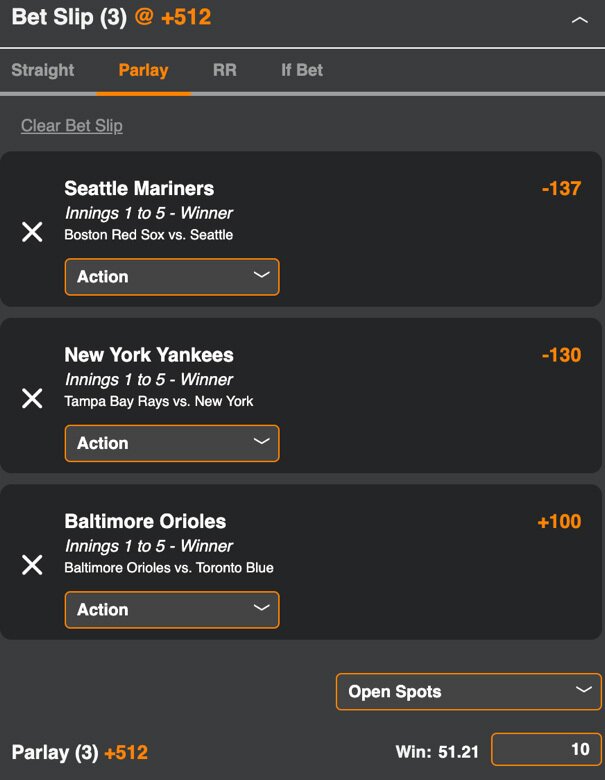
- Teasers: A special type of parlay that combines alternative spreads or totals. You move all the lines in your favor by a certain number of points, such as 6 points on NFL games. This boosts your chances of success, but teasers provide smaller payouts than standard parlays.
- Pleasers: This high-risk, high-reward bet is the opposite of a teaser, as you move all the lines in the sportsbook’s favor. That reduces your chances of success, but pleasers provide larger payouts than regular parlays.
- Round Robins: A round robin requires you to make three or more picks, and you can then place a series of parlays on them. This gives you a degree of insurance, as one loss won’t sink your entire ticket. For example, you could make four picks and place six two-leg parlays, four three-leg parlays, and a four-leg parlay, meaning a $10 round robin would cost you $110.
- Futures: Long-term bets that focus on an entire season or tournament. For example, you can bet on a football team to win the Super Bowl, make or miss the playoffs, or win a certain number of games during the regular season.
Understanding Prop and Exotic Bets
Prop bets focus on player stats, team stats, or in-game events. They’re not usually tied to the result of the game. Prop bets fall into four categories:
- Player props: Bet on an individual athlete’s performance. For example, you can bet over/under on the number of points, assists, rebounds, blocks, or steals a basketball player will deliver in a game.
- Team props: Wager on a specific team’s performance. For instance, you can bet on how many first downs an NFL team will earn during a game.
- Game props: These bets focus on whether an event will occur during a game. For example, you can bet on whether there will be a safety in an NFL game or extra innings in an MLB game.
- Exotic props: Fun wagers on novelty markets, such as the winner of the coin toss, the color of the Gatorade dumped on the winning Super Bowl coach, or how many times the president will post on social media during a game.
Props are fun, and they really broaden your horizons as a sports bettor. However, they tend to have a higher house edge than spreads, totals, and moneylines, so it’s best to use them sparingly. It’s also helpful to shop around for the best odds, as they can vary significantly from one sportsbook to the next.
Group Bets Together With ParlaysGroup Bets Together With Parlays
A parlay lets you combine multiple picks to create a single wager. For example, you might bet on the New York Knicks, Boston Celtics, and Chicago Bulls all to cover the spread.
All three teams would then need to cover for the bet to pay off. If just one team lets you down, the parlay loses. That makes these bets risky, but they can deliver large payouts. The profit you earn from each winning pick rolls over to the next pick, causing your winnings to snowball.
Check out our parlay betting guide for more information about these bets.
Live and In-Play BettingLive and In-Play Betting
The best sportsbooks let you place in-play bets on live sporting events. They start updating the odds on popular markets like the moneyline, spreads, and totals when the game begins. The odds change to reflect the current state of play. You can keep betting on these markets until the closing stages of the game.
Some sportsbooks also offer unique live betting options. For example, you can bet on the result of every point during a tennis match or every down during a football game. This allows you to get really granular with your live plays.
How Sportsbooks Produce OddsHow Sportsbooks Produce Odds
Sportsbooks use powerful algorithms, statistical models, and real-time data feeds to produce their odds.
When it comes to creating odds on a specific game, they assess the relative strengths and weaknesses of both teams. The sportsbooks consider factors like home and away records and recent head-to-heads, along with variables like fatigue, motivation, and injuries.
They then release odds on each potential outcome. This is known as the opening line. The sportsbooks will then adjust the odds and lines to reflect public betting patterns.
Sportsbooks also build a house edge (known as the vigorish) into their betting lines. This house edge lets them pay their overheads and earn a profit.
For example, you’ll often find odds of -110 on either side of a point spread. That means you’d need to risk $110 to win $100 on either team covering. If the sportsbook didn’t take a margin, you’d only need to risk $100 to win $100.
FAQs
Moneylines, totals, spreads, teasers, and round robins are considered lower-risk bets, whereas parlays, pleasers, and exotic props are considered higher risk.
A futures bet focuses on a team’s performance or player’s performance during an entire season or tournament, rather than a single game. People often place futures bets before the tournament begins, but you can also place them after the tournament has started.
A teaser is a type of parlay in which you move all the lines in your favor by a certain number of points. A parlay simply requires you to combine multiple picks to create a single wager, and you don’t need to move the lines. Meanwhile, a round robin is a bet that includes multiple parlays on a group of picks.
Summary
Most sports bettors stick to moneylines, spreads, and totals. They tend to carry a lower house edge than props and parlays, so they’re often more profitable in the long-term.
You can also boost your chances of ending the season in profit by signing up with multiple sites and shopping around for the best odds on each pick you make. Our guide to the best online sportsbooks highlights the sites that consistently offer sharper odds, bigger bonuses, and faster payouts than their competitors.



 Contact Taylor