Top Poker Sites
  Best Online Sports Betting Sites
  Claim the Best Online Gambling Bonuses
  The Best Slots Games to Play Online
  Reviews of Online Gambling Sites





Affiliate Disclosure: Some links on Gambling Nerd are affiliate links. If you use them to sign up or deposit, we may earn a commission at no extra cost to you. These rewards help fund new guides, but they never influence our verdicts. Our recommendations are based on independent research and our own ranking system.
The gambler’s fallacy is the misconception that past events have a direct effect on future outcomes during games of chance.
Some players who hit winning streaks perceive outcomes as causally connected to each other when really, they are independent events.
This bias can lead to poor decision-making, which is why players should be aware of how it works.
What is the Gambler’s Fallacy?
In its essence, the gambler’s fallacy follows the belief in streaks evening out over time.
It is most famously associated with a roulette game played at the Casino Monte Carlo back in 1913.
During the game, the ball landed on black 26 times, causing gamblers to believe that a red is “due”. So players placed bets on red with false confidence, and, needless to say, lost millions.
Another gambling example involves slot machines. Typically, players will believe that a slot machine is expected to hit a jackpot after a long streak of losses, or vice versa.
This can lead to impulsive and irrational decision-making, which can be especially destructive for some types of gamblers.
As individuals, we have the tendency to assume that chance will auto-correct a pattern in order to create equilibrium. This belief isn’t just dedicated to gambling, and also applies to investing.
It’s important to understand that singular events, such as a bet on a horse, a blackjack hit, or a spin of the roulette wheel, are all independent events.
The events that follow are not connected. This can be justified by the probability theory which explains that independent events do not influence each other — the gambler’s fallacy is a misunderstanding of this concept.
Examples of the Gambler's FallacyExamples of the Gambler’s Fallacy
There are three classic examples in gambling that can spur on the gambler’s fallacy very easily. These include playing roulette, coin tosses, and betting on sports.
Roulette
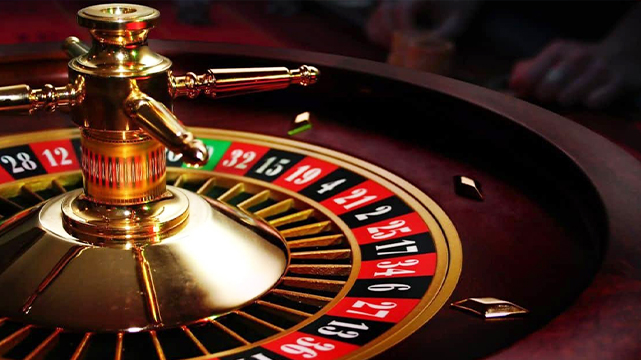
As in the Monte Carlo Casino incident, roulette players may assume that after a long streak of one color, the opposite color is due to hit. So, say that black comes up over 10 times, there’s a fair chance that players will instinctively think that a red is likely to come up on the next spin.

Coin Tosses
The coin toss dates way back before Monte Carlo. In the 1800’s, mathematicians like Pierre-Simon Laplace argued that each coin toss will always have a 50/50 probability of landing either on heads or tails, regardless of how many successions each side has had on the flipside. This is primarily due to each coin toss being independent of the previous one. An example of probability theory.
Sports Betting
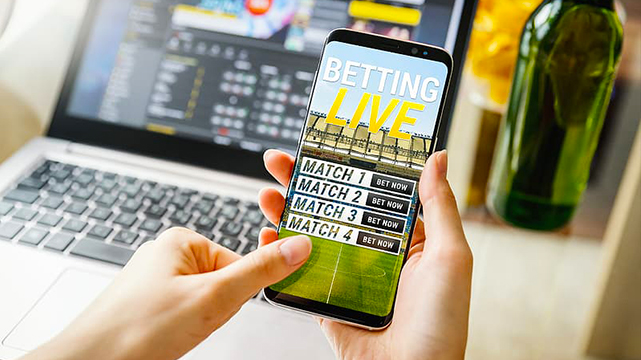
In sports betting, the same principle applies. Take tennis, for example: if the favorite is losing badly, a bettor may start to believe there’s no way that player can keep missing shots and that a comeback is “due.” So they place the bets on the comeback. The cognitive bias of a favorite having to win is firmly instilled in the bettor, even if there’s no statistical basis for it.
The Psychology Behind the Gambler’s Fallacy
The psychology of gambling has been studied for years. Research has concluded that psychological mechanisms such as the illusion of control, cognitive bias, and cognitive dissonance all play their role in fueling the gambler’s fallacy.
First, humans in general don’t like randomness. We try to rationalize it by finding patterns.
We perceive that a sequence of outcomes has some sort of inherent memory, which then allows us to make definitive judgements about future events — the illusion of control.
However, because each event is independent, the notion of a pattern developing from causal effects is false.
This tendency to see patterns is also reinforced by the brain’s discomfort with true randomness.
People are naturally drawn to believe that chance events “balance out” over time, leading them to expect that a losing streak must soon be followed by a win, or vice versa.
This is the very essence of the gambler’s fallacy: the false assumption that past independent events can influence future outcomes.
Cognitive dissonance kicks in when there’s a conflict between a gambler’s belief in their skill and the reality of random outcomes. It almost acts as justification for losses.
For example, when a gambler keeps losing after relying on their “system” i.e. the gambling fallacy, they’ll explain it away as bad luck to keep their beliefs intact.
Together, these psychological mechanisms create the illusion that chance can be predicted, which is simply incorrect.
How Casinos & Bookmakers Exploit the Gambler’s FallacyHow Casinos & Bookmakers Exploit the Gambler’s Fallacy
Casinos are well aware of the gambler’s fallacy, and they design experiences that feed into it. One of the most obvious examples is the roulette board, where recent outcomes are displayed for all to see.
If they see that the last ten spins have landed on red, many players convince themselves black is “due.”
Similarly, slot machines are often set to highlight streaks or near-misses, reinforcing the idea that a win is just around the corner.
Digging deeper into the player’s psyche. By presenting sequences, casinos nudge players into believing randomness follows a pattern.
Sports betting operates in much the same way. Odds and lines are not just shaped by statistics, but by public perception. When a popular team has lost several games, bettors often pile in, thinking a victory is coming.
Bookmakers anticipate this sentiment and adjust lines accordingly, ensuring the house maintains its edge while players act on the false belief that chance outcomes eventually balance out.
The Gambler’s Fallacy vs. Mathematical RealityThe Gambler’s Fallacy vs. Mathematical Reality
While the gambler’s fallacy is rooted in perception, mathematics tells a very different story. As mentioned before, in probability theory, independent events remain unaffected by past outcomes.
A roulette wheel landing on black ten times in a row does not increase the chance of red appearing on the next spin — the odds will reset each time, as events are not mutually dependent on each other. There’s no causal link.
Online gambling makes this even clearer through Random Number Generators (RNGs). These algorithms are designed to ensure that every spin, card, or dice roll is entirely independent of the last.
No memory is stored; no balancing out occurs. Understanding how RNGs work is key to seeing why systems based on streaks or patterns simply don’t hold up.
This tension between human intuition and mathematical reality is nothing new. Pierre-Simon Laplace argued that people consistently misjudge probability because they look for order where none exists.
His insight highlights a truth that still applies today: even with the sophistication of RNGs or algorithms, our instincts pull us toward patterns.
It’s this gap between what the numbers show and what the mind believes that fuels the gambler’s fallacy.
How to Avoid the Gambler’s FallacyHow to Avoid the Gambler’s Fallacy
Avoiding the gambler’s fallacy requires both awareness and discipline. In line with the ethos of our Nerd Nook Hub informational articles, we’ve shared a few tips on how to get ahead of the game and not fall into the trap.

Focus on probabilities, not patterns
Every spin of the roulette wheel, every card dealt, and every slot result is independent. Past outcomes don’t increase or decrease the odds of what comes next. By concentrating on the true probabilities, rather than imagined streaks, players can make clearer decisions and avoid the trap of thinking a win is somehow guaranteed.

Use bankroll discipline
Setting a gambling budget is one of the most practical ways to protect yourself. Decide in advance how much you’re willing to lose, and break that total into smaller sessions. Once it’s gone, stop. Treating gambling money as entertainment spend helps prevent chasing losses — a behavior often fueled by the gambler’s fallacy.
Recognize emotional triggers
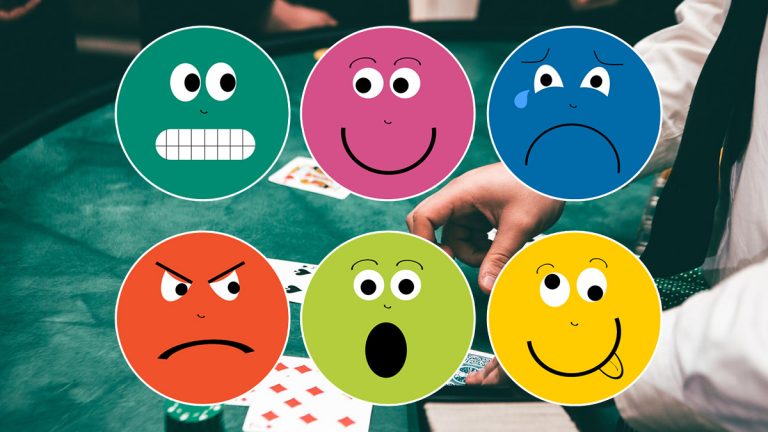
Believing that you are due a win, or feeling frustration after a losing streak, are signs that emotions are taking control. Learning to spot these triggers can help you pause, step back, and make more rational choices.
Incorporate responsible gambling resources
Tools such as deposit limits, session reminders, and self-exclusion programs are widely available for gamblers.
Making use of them creates healthy boundaries and reinforces discipline, keeping gaming enjoyable rather than destructive.
It goes without saying that by applying these strategies, players can feel confident in the knowledge that they won’t be tricked by a false sense of control in outcomes that are the result of pure chance.
Related ConceptsRelated Concepts
The gambler’s fallacy is not the only cognitive trap influencing gambling behavior. In fact, it sits alongside several other biases that affect how players interpret chance and probability.
Two of the most common are the hot hand fallacy and confirmation bias.
Hot Hand Fallacy
While the gambler’s fallacy assumes that streaks will inevitably end, the hot hand fallacy works in the opposite direction.
It assumes that a winning streak will continue indefinitely. For example, a slot player may believe that because a machine has just paid out, it is now “hot” and will keep paying.
In sports, bettors often assume that a basketball player who has scored five shots in a row will almost certainly hit the sixth.
In both cases, the underlying misconception is the same: expecting random outcomes to follow a pattern of continuity rather than independence.
Confirmation Bias
Another trap is the tendency to notice only the evidence that supports existing beliefs.
In gambling, this often looks like remembering the rare occasions when a “due” win came through, while conveniently forgetting the many times it did not.
A bettor might cling to the idea that their lucky number on roulette always pays off, even though the data over time shows no such trend.
Together, these biases overlap in how they distort rational thinking, but they approach it from different angles.
Each one encourages players to impose meaning on chance, creating the illusion of order where none actually exists.
Summary
It’s important to understand how the gambler’s fallacy works so that you can make smarter decisions when gambling.
Too often, players get caught up in patterns or the belief that a win is due, only to find those beliefs work against them.
We believe every player deserves the tools to enjoy gambling without slipping into harmful patterns or gambling addiction.
When you base your choices on knowledge rather than misconceptions, you give yourself the best chance of staying in control.
For more practical tips and resources, head over to our responsible gambling page, and remember to keep gaming safe and fun!


 Contact Isaac