The Top Poker Sites for Online Poker in 2025
  Best Online Sports Betting Sites
  Claim the Best Online Gambling Bonuses
  The Best Slots Games to Play Online
  Reviews of Online Gambling Sites
 Is Bingo Considered Gambling?
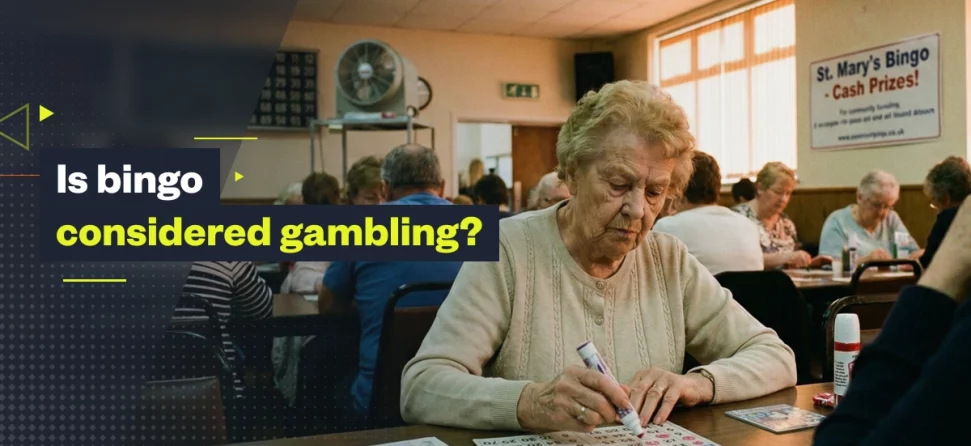



For many people, bingo brings to mind church basements, community centers, and friendly gatherings where neighbors mark their cards while sipping coffee. It feels wholesome, social, and miles away from the flashing lights and high stakes of a casino floor. But here’s a question that might catch you off guard: Is bingo actually gambling?
The short answer? Yes—in most legal contexts, bingo absolutely qualifies as gambling. But the full picture is more interesting than you might expect. How regulators classify bingo, when it crosses into gambling territory, and how online versions shake things up all play important roles in understanding this popular pastime.
Does Bingo Meet the Legal Definition of Gambling?
To figure out whether bingo is gambling, we need to look at how the law defines gambling in the first place. Across most jurisdictions, an activity counts as gambling when it contains three specific elements: prize, chance, and consideration. Let’s see how bingo measures up against each one.

Prize
This first element is pretty straightforward: there’s got to be something of value at stake. In bingo, players compete to win prizes, and these can take all sorts of forms. Cash payouts are the most common, ranging from modest amounts at local games to substantial jackpots at commercial bingo halls or online platforms.
But money isn’t the only prize that counts. Gift cards, electronics, vacation packages, even physical goods like household items all qualify as prizes of value. Whether you’re playing for $50 or a new television, if there’s something tangible to win, this box is checked.

Chance
The second element looks at whether the outcome depends primarily on luck rather than skill. Bingo passes this test with flying colors. The numbers called during a game are drawn randomly, whether from a mechanical ball cage or an electronic random number generator.
Players have zero ability to influence which numbers get called or when. You can’t strategize your way to B-7 being announced next. Unlike poker, where skill can significantly impact outcomes, or sports betting, where knowledge might inform better decisions, bingo is purely a game of chance. You mark the numbers you’re dealt and hope luck’s on your side.

Consideration
The third and final element is consideration—a legal term meaning something of value must be exchanged to participate. In most bingo games, players pay for their cards or buy into the session. Whether it’s $5 for a single card at a church fundraiser or $50 for a package at a commercial hall, that payment constitutes consideration.
This exchange of money for the opportunity to win creates the economic transaction that transforms a simple game into gambling. Even when the entry fee seems nominal, it still counts as consideration under the law.
The Bottom Line: When you put these three elements together, traditional bingo clearly meets the legal definition of gambling. Players pay money (consideration) for a chance to win prizes (prize) in a game determined by random number selection (chance).
Why Is Bingo Sometimes Treated Differently?
If bingo is gambling, why does it often feel like it occupies a different category than casinos or sports betting? The answer lies in how lawmakers and regulators have carved out special treatment for certain types of bingo, particularly when it serves community or charitable purposes.
Charitable bingo represents the most common exception. Many states and jurisdictions allow churches, veterans’ organizations, schools, and nonprofit groups to host bingo games as fundraising activities. These games still meet the technical definition of gambling, but they receive lighter regulation and special legal exemptions.
State carve-outs in gaming laws further complicate the picture. Some states explicitly exclude bingo from their general gambling prohibitions or regulate it under entirely different statutes. This doesn’t mean bingo isn’t gambling—it just means the law treats it as a special category of gambling with its own rules.
There’s also the matter of community perception versus legal reality. Because bingo’s been socially acceptable for generations and is associated with community gatherings rather than problem gambling, it doesn’t carry the same stigma as other forms of betting. This cultural acceptance has influenced how aggressively it’s regulated, even though the legal classification remains clear.
Online Bingo
The digital age has transformed bingo from a primarily in-person activity to a thriving online industry, and this shift has real implications for how it’s classified and regulated.
Real-money online bingo sites operate much like their physical counterparts, but with important distinctions. Players create accounts, deposit funds, purchase virtual bingo cards, and compete for cash prizes. These platforms clearly constitute gambling under any reasonable definition.
Sweepstakes bingo models represent an attempt to navigate restrictive gambling laws, particularly in the United States. These platforms often use a dual-currency system where players can purchase “gold coins” for entertainment and receive “sweeps coins” as promotional bonuses. The sweeps coins can potentially be redeemed for prizes.
Jurisdictional differences matter enormously. In the UK, online bingo is legal, regulated, and widely accepted. In most U.S. states, real-money online bingo is either explicitly illegal or exists in a legal gray area. Some states like New Jersey have legalized and regulated online gambling, including bingo, while others maintain strict prohibitions.
Final Verdict
In most legal contexts, bingo is absolutely considered gambling.
When you pay money to play bingo with the chance of winning prizes determined by random number selection, you’re engaging in gambling. This is true whether you’re playing at a commercial bingo hall, a church fundraiser, or an online platform. The three elements that define gambling, prize, chance, and consideration, are all present.
That said, certain formats receive special treatment under the law. Charitable bingo operated by nonprofit organizations often benefits from regulatory exemptions and simplified licensing requirements. Free-to-play promotional bingo without required purchases may not constitute gambling if structured carefully. And social bingo games with no real-world prizes fall outside the definition entirely.
Whether you’re daubing cards at your local hall or clicking numbers on your phone, you’re participating in a game of chance with real stakes, and that’s the very definition of gambling.



 Contact Pavo