US Online Gambling Habits Survey by GamblingNerd






Affiliate Disclosure: Some links on Gambling Nerd are affiliate links. If you use them to sign up or deposit, we may earn a commission at no extra cost to you. These rewards help fund new guides, but they never influence our verdicts. Our recommendations are based on independent research and our own ranking system.
What influences how people gamble online, and how do they view the risks and regulation of different gambling products?
GamblingNerd surveyed 102 active online gamblers in October 2026 to examine their casino preferences, sports betting habits, prediction-market activity, spending, and attitudes toward responsible gambling.
The survey found that 94.1% of respondents used smartphones for gambling and 68.6% gambled several times a week or more. Online slots were the most commonly selected casino game (77.8% among respondents answering that question), while parlays led sports betting preferences (56.7%).
Beyond these playing habits, the research revealed notable differences between consumer perceptions and experiences. Among prediction-market users, 81.6% regarded trading contracts as gambling.
This report examines the results across each gambling category, with supporting charts, methodology, and research limitations. The findings offer insight into the surveyed US resident respondents rather than a representative picture of gambling habits across the United States.
On This Page
- Key Findings
- Participants
- Online Casino Usage
- Online Sports Betting Usage
- Prediction Market Usage
- Responsible Gambling
- Our Methodology
Key Findings
Gambling Decisions Involve More Than Game Preferences
- Among respondents answering the online casino questions, 58.9% said return to player (RTP) affected their game selection, while 53.3% said the same about volatility. When choosing an online casino, 48.0% selected bonuses and promotions as an influence, compared with 45.1% for casino reputation and reviews and 45.1% for social media.
- Prediction-market users also reported researching their trades, with 92.1% answering yes when asked whether they conducted independent research about the events they traded.
Reported Gambling Knowledge Does Not Eliminate Negative Experiences
- A large majority of respondents (90.2%) felt knowledgeable about responsible-gambling practices. At the same time, 41.2% reported having experienced negative financial, emotional, or social impacts from online gambling.
Respondents Consider Prediction Markets as a Form of Gambling
- 81.6% of prediction market users consider trading contracts a form of gambling. Among the 38 respondents who had traded prediction market contracts, 68.4% also believed these platforms should be regulated like gambling sites.
Who Participated in the Survey?

- 52.9% were male and 47.1% female.
- Respondents covered a wide range of ages, but 35–39 was the most common group.
- 54.9% identified as white, 33.3% as Black or African American, and the rest as Hispanic or Latino, Native American, Asian, or another ethnicity.
- 63.7% work full-time, 11.8% part-time, and 10.8% are unemployed, with the remaining 13.7% outside paid work (such as homemakers or retirees).
Players Online Gambling Behavior

- 94.1% gamble on a smartphone, while 32.4% use a laptop or desktop, and 21.6% play via a tablet, with many using more than one device.
- 68.6% gamble several times a week or more, including 30.4% who play daily, while 16.7% gamble once a week and 14.7% monthly or less.
- Evening is the most popular time to gamble (44.1%), followed by the afternoon (23.5%), late at night (20.6%), and the morning (11.8%).
- 42.2% typically play for one to two hours per session, while 22.5% play for less than an hour and 35.3% for two hours or more.
Most respondents work full-time and enjoy gambling in their downtime. For many, that involves playing on their phones in the evening, several times a week, for up to two hours.
They still make time for other hobbies alongside gambling. Almost three-quarters (72.5%) play video games, while other popular pursuits include non-gambling card games (43.1%) and board games (38.2%).
Online Casino UsageWhat Influences Online Casino Usage?
Game preferences were only part of the decision-making process, the results suggest that respondents considered several factors when choosing casino games and platforms, from game characteristics to promotional offers and information sources.
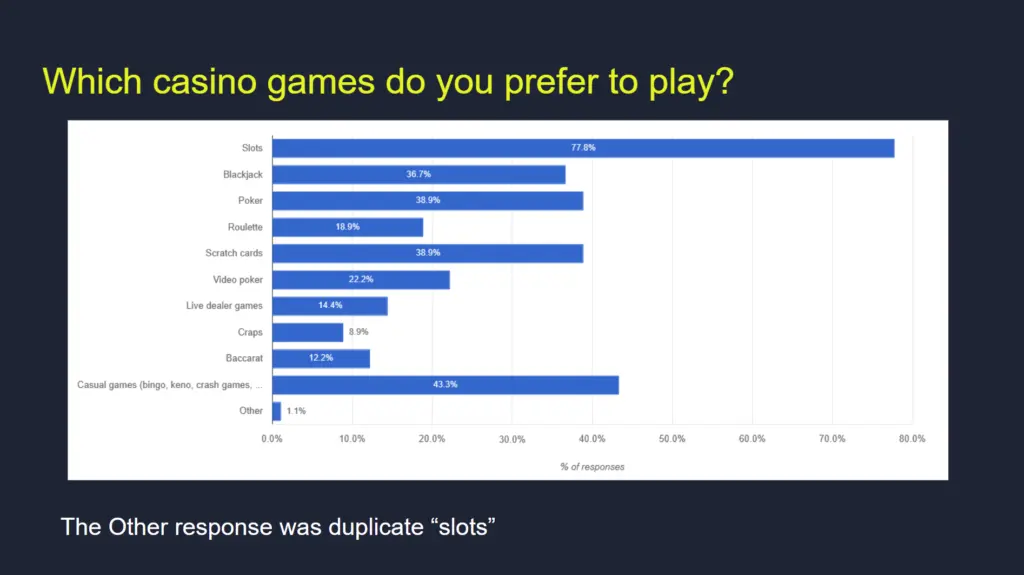
First, we asked players to name their favorite casino games, and 77.8% said they like online slots. Next came a broad category of casual games, including bingo, keno, and crash games (43.3%), followed by poker and scratch cards (both 38.9%).
Blackjack was the most popular virtual table game (36.7%), ahead of roulette (18.9%), baccarat (12.2%), and craps (8.9%). Less than a quarter chose video poker (22.2%), while only 14.4% selected live dealer games.
Most players like variety. Only 13.3% stick to one game per session, while 18.9% try five or more. When they find a game they enjoy, 72.2% of players go looking for other titles from the same developer.
Game math matters too. The return to player (RTP) rate influences 58.9% of players when choosing a game, while volatility shapes the decision for 53.3%.
Spending tends to be modest. Nearly three-quarters of players (73.3%) deposit $50 or less when trying a new online casino, and just over half (51.1%) spend $100 or less a month. At the top end, 21.1% spend more than $300 a month, including 4.4% who spend over $1,000.
Bonuses and promotions are the biggest draw when choosing an online casino (48.0%), narrowly ahead of reputation and reviews (45.1%) and social media (45.1%). Celebrity endorsements barely register at 7.8%.
Online Sports Betting UsageHow Do Survey Respondents Bet on Sports?
Nearly nine in 10 respondents bet on sports at least occasionally, and over half (53.9%) bet at least a few times a week. Another 13.7% only get involved for big events like the Super Bowl.
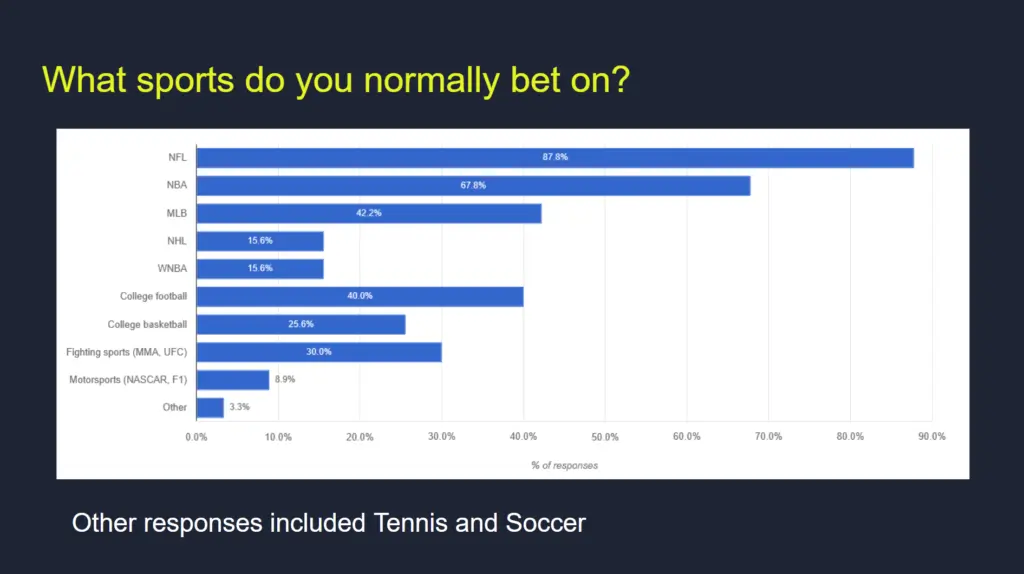
Football reigns supreme. The NFL tops the list at 87.8%, followed by the NBA (67.8%), MLB (42.2%), and college football (40.0%).
Parlays are the most popular bet type (56.7%), ahead of moneylines (51.1%), totals (38.9%), spreads (36.7%), and props (22.2%). Two-thirds bet $100 or less per month on sports, while 20% wager $101 to $300 and only around 12% stake more than $300.
Betting and watching sports also frequently overlapped: 74.4% said they watched the games they bet on, while another 16.7% did so sometimes.
Prediction Market UsagePrediction Market Usage
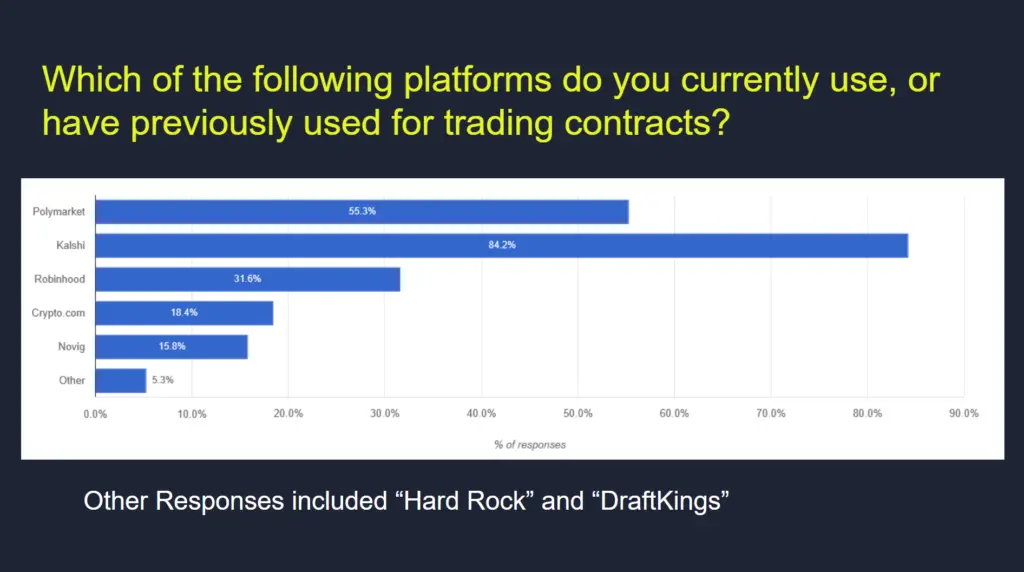
Over a third of respondents (37.3%) have traded contracts on prediction markets. Kalshi dominates, with 84.2% of traders having used it, ahead of Polymarket (55.3%), Robinhood (31.6%), Crypto.com (18.4%), and Novig (15.8%).
Sports contracts are the most popular (76.3%), but politics (52.6%), entertainment (42.1%), and weather (39.5%) all have sizable followings.
Traders take the research seriously: 92.1% study the events they speculate on. They also spend more than sports bettors do: 39.5% put over $100 a month into contracts, compared with 32.2% of sports bettors, and 15.8% spend more than $300.
The most striking result is that traders don’t buy the industry’s framing. Despite the “trading” label, 81.6% consider it gambling, and 68.4% think prediction markets should be regulated like gambling sites.
Note: The survey captures opinions rather than legal classifications. Its small prediction-market subgroup also prevents the findings from being generalized to the wider US population. The results contribute a consumer perspective to the ongoing discussion about prediction-market regulation, rather than establishing how these platforms should be regulated.
Responsible Gambling and Actual Gambling Behavior
Respondents said they mainly gamble online for the potential to win money (75.5%) and entertainment (74.5%). Over half (57.8%) also cited the thrill of winning, while fewer pointed to passing the time (32.4%) or redeeming bonuses (22.5%).
The vast majority (90.2%) are confident they know how to gamble responsibly. However, 41.2% have experienced negative financial, emotional, or social effects from online gambling. We didn’t ask how serious those effects were, so they may have been minor, but there’s still a clear gap between knowing how to gamble responsibly and doing so.
Most players are satisfied with the industry’s efforts, with 62.7% saying online casinos do enough to promote responsible gambling. Still, more than a third (37.3%) think they could do more. Respondents are relaxed about advertising, though, with 75.5% happy for casinos, sportsbooks, and prediction markets to promote their services on TV and radio.
Note: These figures highlight an important distinction between perceived knowledge and reported experience. The survey did not independently test participants’ responsible-gambling knowledge or measure the severity of reported effects, so it cannot determine why those experiences occurred.
Even so, the findings raise a relevant question for a consumer-protection research: how does confidence in responsible-gambling knowledge relate to gambling behavior and the experience of harm?
If you need support, our gambling addiction resources page explains where to find free, confidential help.
What Do We Do With This Data?
We can draw three clear conclusions about how people gamble online and what that means for both players and the industry.
Prediction Markets Are Already Part of the Gambling Mix
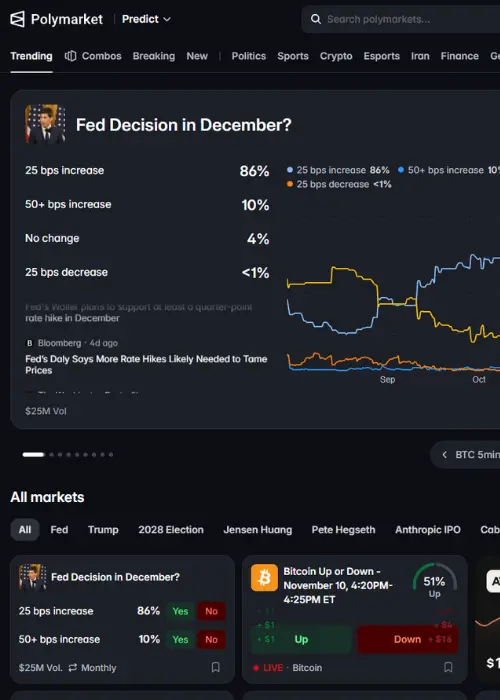
With more than a third of respondents (37.3%) trading on prediction markets, mostly on sports, these sites have clearly gone mainstream. The focus on sports mirrors the wider market, as sports made up about 78% of Kalshi’s trading volume in July 2026, according to a Pew Research Center analysis.
Most traders consider prediction markets a form of gambling, a view that many state regulators share. The legal picture is unsettled, as federal appeals courts have issued conflicting rulings on whether states can regulate sports contracts, and New Jersey asked the US Supreme Court to settle the matter in September 2026.

Players Do More Homework Than You Might Think
Our results suggest most players take a hands-on approach at every stage. Before signing up with an online casino, many check reviews and evaluate the site’s reputation, as well as the bonuses on offer. When picking a game, most consider RTP and volatility, and many explore other titles from developers they already enjoy.
Prediction market traders go further still, with more than nine in 10 researching the events they trade. Our survey clearly shows that players value reliable, detailed information, which is why we focus on in-depth, data-driven coverage at GamblingNerd.

Feeling Informed Doesn’t Always Mean Staying Safe
While 90.2% say they know how to gamble safely, 41.2% still report negative effects, so knowledge alone doesn’t always prevent harm.
Easy access may be a factor. With 94.1% gambling on a smartphone and 30.4% playing every day, a bet is never more than a few taps away. Setting deposit limits and reality checks is a useful way to stay in control.
Our Methodology
We used a survey platform called Conjointly to ask online gamblers about their habits in October 2026. To keep the focus on active players, we excluded anyone who hadn’t gambled online in the six months before the survey. That left a final sample of 102 respondents.
They answered questions on everything from monthly spending to how much research they do and how they choose casino games. Some follow-up questions only went to respondents who’d tried a particular form of gambling. For example, only people who’d traded contracts answered our prediction market questions.
We kept the questions neutral to avoid nudging respondents toward particular answers. Most were simple multiple-choice questions about behavior – some allowed more than one answer – although a handful asked for opinions on regulation and advertising.
Limitations
This was a small survey of active online gamblers, not a nationally representative study. Our online gambling survey draws on a focused group of active players, the findings are self-reported and should not be generalized to all US adults or online gamblers. Differences between subgroups should be interpreted cautiously, particularly where respondent counts are small.
See the Research for Yourself
You can view the results of our Gambling Habits Survey here. You can use the results of our survey to inform your own articles and publications, but please cite GamblingNerd as a source when doing so.
Summary
Our survey shows US players mixing familiar favorites like online slots and parlays with newer options like prediction markets, which most traders view as just another form of gambling. Across the board, players put real thought into their choices, weighing payout rates, reading reviews, and researching trades before they put any money on the line.
These findings raise questions worth exploring through larger, representative studies, particularly how consumers understand prediction markets and how perceptions of responsible gambling relate to reported experiences.
Whatever you play, our in-depth gambling guides can help you understand the numbers behind every spin, bet, and contract.


 Contact Isaac